Buy logistikunternehmen.eu ?
We are moving the project
logistikunternehmen.eu .
Are you interested in purchasing the domain
logistikunternehmen.eu ?
domain@kv-gmbh.de · 0541-91531010
Buy logistikunternehmen.eu ?
How is equity calculated?
Equity is calculated by subtracting the total liabilities of a company from its total assets. In other words, equity represents the ownership interest in a company's assets after all debts and obligations have been paid off. It is a measure of the company's net worth and is often used by investors and analysts to assess the financial health and value of a company. Equity can also be calculated for individuals by subtracting their total liabilities (such as mortgages, loans, and credit card debt) from their total assets (such as savings, investments, and property). **
What is equity capital?
Equity capital refers to the funds that a company raises by selling shares of ownership in the business. These shares represent ownership in the company and entitle the shareholders to a portion of the company's profits and a say in its decision-making processes. Equity capital is a crucial source of long-term funding for a company and can be raised through the sale of common stock or preferred stock. Unlike debt capital, equity capital does not need to be repaid and does not accrue interest, but it does dilute the ownership stake of existing shareholders. **

Similar search terms for Equity
Top-Angebote
Products related to Equity:
-
Uplifted Finds Mini Portable Folding Stove And High Fidelity Thermal Logistics Architecture Mini Portable Folding Stove And High Fidelity Thermal Logistics ArchitectureCommand ultimate environmental confidence with this Stainless Steel Mini Folding Stove, a thermal regulation solution specifically engineered to act as a comprehensive tool for elite organization and superior technical ergonomics. Built with a...177,97 $*Shipping: 0,00 $Secure redirect to the provider
-
Uplifted Finds High Volume Safety Breakaway Logistics Hub redOptimize your pet inventory management with the HighVolume Safety Hub, a professionalgrade identification system engineered with multiunit deployment logic. This highutility lot features 100 individual collar modules, each constructed with a...165,97 $*Shipping: 0,00 $Secure redirect to the provider
-
Uplifted Finds High Volume Safety Breakaway Logistics Hub greenOptimize your pet inventory management with the HighVolume Safety Hub, a professionalgrade identification system engineered with multiunit deployment logic. This highutility lot features 100 individual collar modules, each constructed with a...165,97 $*Shipping: 0,00 $Secure redirect to the provider
-
Uplifted Finds High Volume Safety Breakaway Logistics Hub blackOptimize your pet inventory management with the HighVolume Safety Hub, a professionalgrade identification system engineered with multiunit deployment logic. This highutility lot features 100 individual collar modules, each constructed with a...165,97 $*Shipping: 0,00 $Secure redirect to the provider



-
What is the accumulated equity?
The accumulated equity is the total value of an asset after subtracting any liabilities or debts associated with it. It represents the ownership interest or value that an individual or entity has in the asset. Accumulated equity can increase over time as the asset appreciates in value or as debts are paid off, resulting in a higher net worth for the owner. It is an important measure of financial health and can be used to determine the overall value of an investment or property. **
-
'Equity type or legal type?'
Equity type refers to the ownership structure of a company, indicating whether it is publicly traded or privately held. Legal type, on the other hand, refers to the legal structure of a business entity, such as a corporation, partnership, or sole proprietorship. While equity type focuses on ownership, legal type is concerned with the legal rights and responsibilities of the entity. Both equity type and legal type are important considerations when determining the structure and governance of a business. **
-
How do you calculate equity?
Equity is calculated by subtracting the total liabilities of a company from its total assets. The formula for calculating equity is: Equity = Total Assets - Total Liabilities. This calculation gives a measure of the ownership interest in a company, representing the residual value of the assets after all debts and liabilities have been paid off. Equity is an important financial metric that is used to assess the financial health and stability of a company. **
-
How can one improve equity?
One can improve equity by addressing systemic barriers and biases that contribute to inequality. This can be achieved through policies and practices that promote equal access to opportunities, resources, and representation for all individuals, regardless of their background. Additionally, promoting diversity and inclusion in all aspects of society can help to create a more equitable environment. It is also important to actively listen to and amplify the voices of marginalized communities in decision-making processes. **


How does depreciation affect equity?
Depreciation reduces the value of assets on the balance sheet, which in turn reduces the overall equity of the company. This is because equity is calculated as the difference between a company's assets and liabilities. As the value of assets decreases due to depreciation, the overall equity of the company also decreases. This can impact the financial health of the company and its ability to attract investors or secure financing. **
What is the difference between equal opportunities, equity of opportunity, and equity of achievement?
Equal opportunities refers to the idea that everyone should have the same access to opportunities, resources, and rights regardless of their background or circumstances. Equity of opportunity goes a step further, aiming to ensure that everyone has the support and resources they need to have an equal chance of success, taking into account individual differences and barriers. Equity of achievement focuses on ensuring that everyone has the same chance of achieving success, regardless of their starting point, and aims to address and eliminate disparities in outcomes. In summary, while equal opportunities focuses on access, equity of opportunity and equity of achievement focus on addressing and eliminating disparities in support and outcomes. **
Top-Angebote
Products related to Equity:
-
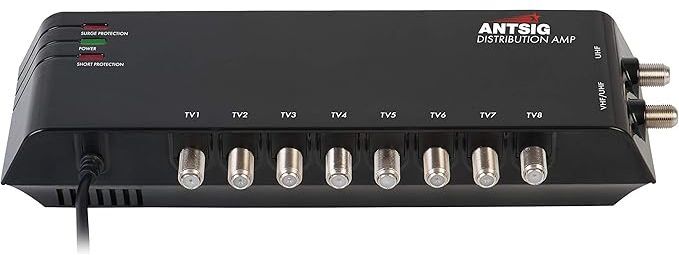
Antsig Distribution Amplifier 8 Way, NewEnsure crystal-clear signal strength across multiple devices with the Antsig Distribution Amplifier 8 Way — a reliable and high-performance solution for distributing digital TV, FM, or DAB signals to multiple TVs or tuners in your home or commercial setup. This amplifier is designed to boost signal strength and maintain picture and sound quality, especially in areas with weak reception. Whether you're connecting TVs in different rooms or setting up a home entertainment system, Antsig delivers superior signal stability and wide coverage, making it the perfect choice for seamless media enjoyment. 🔶 ( 8-Way Signal Distribution ) – Distributes amplified signal to up to 8 different TVs or devices without signal loss. 🔶 ( High Gain Amplification ) – Enhances weak signals, improving clarity and reception across all connected devices. 🔶 ( Digital TV, FM & DAB Compatible ) – Supports a wide range of signals for versatile use in your entertainment setup. 🔶 ( Easy Plug-and-Play Installation ) – Simple setup with no complex configuration needed; ready to go out of the box. 🔶 ( Low Noise Output ) – Delivers a clean, interference-free signal for superior audio and video performance. 🔶 ( Compact & Durable Design ) – Space-saving design fits easily into any setup and built with long-lasting components. 🔶 ( Ideal for Homes & Commercial Spaces ) – Perfect for large households, offices, apartments, and hotels. 🔶 ( Power Supply Included ) – Comes complete with its own power adapter for uninterrupted performance. 🔶 ( Stable Signal Across All Ports ) – Ensures consistent signal strength across all 8 outputs. 🔶 ( Wall-Mountable Option ) – Flexible installation with optional wall mounting for better space management. The Antsig Distribution Amplifier 8 Way is the ultimate solution for homes or businesses needing consistent, high-quality signal distribution across multiple screens. Say goodbye to signal dropouts and enjoy uninterrupted entertainment with strong, stable performance in every room. Ideal for digital TV installations, this amplifier ensures you get the best possible viewing and listening experience from all your connected devices.24,99 £*Shipping: 0,00 £Secure redirect to the provider
-
Radius Electrofusion Gas Distribution Valve 32mmDonkin MDPE (PE 80) electrofusion fittings, for use with MDPE (PE80) gas pipe, is manufactured to the requirements of B.G Transco Technical Standard PL2 - Part 4. Electrofusion fittings are supplied in individual sealed bags to avoid contamination of the joint surfaces prior to jointing.79,02 £*Shipping: 0,00 £Secure redirect to the provider
-
Uplifted Finds Mini Portable Folding Stove And High Fidelity Thermal Logistics Architecture Mini Portable Folding Stove And High Fidelity Thermal Logistics ArchitectureCommand ultimate environmental confidence with this Stainless Steel Mini Folding Stove, a thermal regulation solution specifically engineered to act as a comprehensive tool for elite organization and superior technical ergonomics. Built with a...177,97 $*Shipping: 0,00 $Secure redirect to the provider
-
Uplifted Finds High Volume Safety Breakaway Logistics Hub redOptimize your pet inventory management with the HighVolume Safety Hub, a professionalgrade identification system engineered with multiunit deployment logic. This highutility lot features 100 individual collar modules, each constructed with a...165,97 $*Shipping: 0,00 $Secure redirect to the provider
-
How is equity calculated?
Equity is calculated by subtracting the total liabilities of a company from its total assets. In other words, equity represents the ownership interest in a company's assets after all debts and obligations have been paid off. It is a measure of the company's net worth and is often used by investors and analysts to assess the financial health and value of a company. Equity can also be calculated for individuals by subtracting their total liabilities (such as mortgages, loans, and credit card debt) from their total assets (such as savings, investments, and property). **
-
What is equity capital?
Equity capital refers to the funds that a company raises by selling shares of ownership in the business. These shares represent ownership in the company and entitle the shareholders to a portion of the company's profits and a say in its decision-making processes. Equity capital is a crucial source of long-term funding for a company and can be raised through the sale of common stock or preferred stock. Unlike debt capital, equity capital does not need to be repaid and does not accrue interest, but it does dilute the ownership stake of existing shareholders. **
-
What is the accumulated equity?
The accumulated equity is the total value of an asset after subtracting any liabilities or debts associated with it. It represents the ownership interest or value that an individual or entity has in the asset. Accumulated equity can increase over time as the asset appreciates in value or as debts are paid off, resulting in a higher net worth for the owner. It is an important measure of financial health and can be used to determine the overall value of an investment or property. **
-
'Equity type or legal type?'
Equity type refers to the ownership structure of a company, indicating whether it is publicly traded or privately held. Legal type, on the other hand, refers to the legal structure of a business entity, such as a corporation, partnership, or sole proprietorship. While equity type focuses on ownership, legal type is concerned with the legal rights and responsibilities of the entity. Both equity type and legal type are important considerations when determining the structure and governance of a business. **
Similar search terms for Equity
-
Uplifted Finds High Volume Safety Breakaway Logistics Hub greenOptimize your pet inventory management with the HighVolume Safety Hub, a professionalgrade identification system engineered with multiunit deployment logic. This highutility lot features 100 individual collar modules, each constructed with a...165,97 $*Shipping: 0,00 $Secure redirect to the provider
-
Uplifted Finds High Volume Safety Breakaway Logistics Hub blackOptimize your pet inventory management with the HighVolume Safety Hub, a professionalgrade identification system engineered with multiunit deployment logic. This highutility lot features 100 individual collar modules, each constructed with a...165,97 $*Shipping: 0,00 $Secure redirect to the provider
-
Uplifted Finds High Volume Safety Breakaway Logistics Hub blueOptimize your pet inventory management with the HighVolume Safety Hub, a professionalgrade identification system engineered with multiunit deployment logic. This highutility lot features 100 individual collar modules, each constructed with a...165,97 $*Shipping: 0,00 $Secure redirect to the provider
-
Uplifted Finds High Volume Safety Breakaway Logistics Hub orangeOptimize your pet inventory management with the HighVolume Safety Hub, a professionalgrade identification system engineered with multiunit deployment logic. This highutility lot features 100 individual collar modules, each constructed with a...165,97 $*Shipping: 0,00 $Secure redirect to the provider
-
How do you calculate equity?
Equity is calculated by subtracting the total liabilities of a company from its total assets. The formula for calculating equity is: Equity = Total Assets - Total Liabilities. This calculation gives a measure of the ownership interest in a company, representing the residual value of the assets after all debts and liabilities have been paid off. Equity is an important financial metric that is used to assess the financial health and stability of a company. **
-
How can one improve equity?
One can improve equity by addressing systemic barriers and biases that contribute to inequality. This can be achieved through policies and practices that promote equal access to opportunities, resources, and representation for all individuals, regardless of their background. Additionally, promoting diversity and inclusion in all aspects of society can help to create a more equitable environment. It is also important to actively listen to and amplify the voices of marginalized communities in decision-making processes. **
-
How does depreciation affect equity?
Depreciation reduces the value of assets on the balance sheet, which in turn reduces the overall equity of the company. This is because equity is calculated as the difference between a company's assets and liabilities. As the value of assets decreases due to depreciation, the overall equity of the company also decreases. This can impact the financial health of the company and its ability to attract investors or secure financing. **
-
What is the difference between equal opportunities, equity of opportunity, and equity of achievement?
Equal opportunities refers to the idea that everyone should have the same access to opportunities, resources, and rights regardless of their background or circumstances. Equity of opportunity goes a step further, aiming to ensure that everyone has the support and resources they need to have an equal chance of success, taking into account individual differences and barriers. Equity of achievement focuses on ensuring that everyone has the same chance of achieving success, regardless of their starting point, and aims to address and eliminate disparities in outcomes. In summary, while equal opportunities focuses on access, equity of opportunity and equity of achievement focus on addressing and eliminating disparities in support and outcomes. **
* All prices are inclusive of VAT and, if applicable, plus shipping costs. The offer information is based on the details provided by the respective shop and is updated through automated processes. Real-time updates do not occur, so deviations can occur in individual cases. ** Note: Parts of this content were created by AI.